Open 8am–6pm · Emergency call-outs available·Serving Oxfordshire · Berkshire · Cotswolds
whitehorseroofing@outlook.com 07522 468971
White Horse Roofing Services
07522 468971Get Free Quote
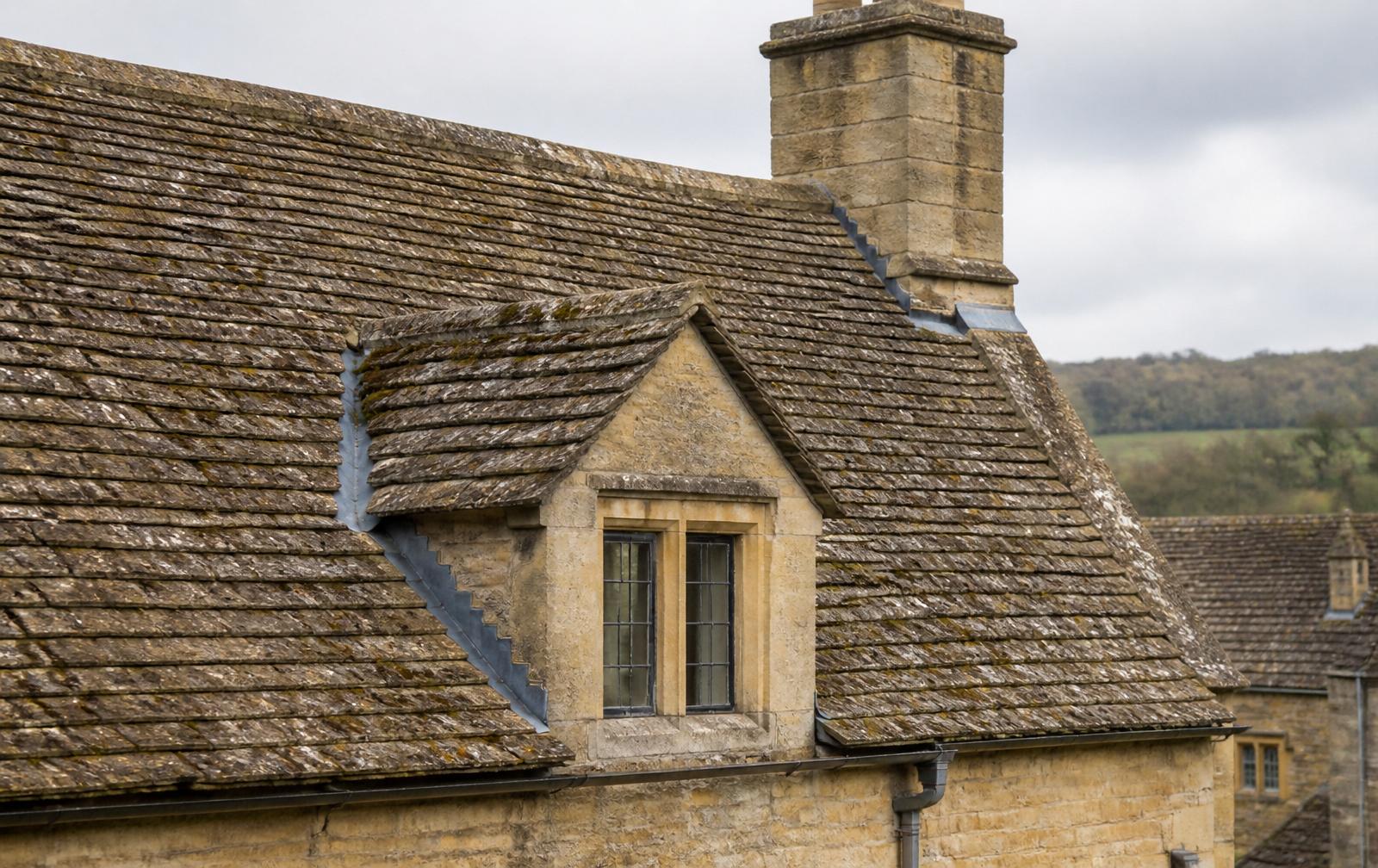
Traditional honey-coloured Cotswold stone tile roof with stone dormer, lead flashings and stone chimney — heritage roofing by White Horse Roofing Services, Oxfordshire & Cotswolds
Cotswold Stone Roofing · Oxfordshire, Berkshire & the Cotswolds

Cotswold Stone Roofing —
Heritage Re-Roofs &
Repairs Done Properly.

Reclaimed Cotswold limestone tiles, laid in traditional diminishing courses on breathable felt, bedded in lime mortar and detailed in code-4 lead — heritage roofing that looks right and lasts a century.

Heritage specialists · Reclaimed stone · 15-year workmanship guarantee

Established 2017
1,500+ Jobs Completed
15-Yr Workmanship Guarantee
£1M Public Liability Insurance
Checkatrade 9.78/10
The Service

What cotswold stone roofing is,
and who it's for.

A Cotswold stone roof is unlike any other roof in the country. Split from local oolitic limestone, hand-dressed and laid in diminishing courses from the largest tiles at the eaves to the smallest at the ridge, it is heavy, distinctive, and — done properly — will outlast the walls that carry it. Done badly, with the wrong tiles, the wrong mortar, or a tradesperson who has never worked with stone, it fails within a decade and takes irreplaceable heritage tiles down with it.

White Horse Roofing has specialised in Cotswold stone roofing across the Cotswolds, Oxfordshire and Berkshire since 2017. Full stone re-roofs, partial re-covers, ridge and verge rebuilds, chimney flashings on stone stacks, valley repairs — every job carried out to conservation standard by our own team, using reclaimed tiles wherever we can and new-cut Cotswold limestone where we cannot.

Who it's for

Owners of stone-built cottages, farmhouses, barns and period properties across the Cotswolds and North Wessex Downs. Owners of listed buildings and homes in conservation areas where a re-roof must satisfy the conservation officer as well as the weather. Buyers whose survey has flagged a slipped, sagging or patched stone roof — and who want it put right by a tradesperson who understands stone.

When it's needed

When stone tiles are slipping regularly and the bedding mortar is falling out of the ridge. When the felt underlay is visibly perished at the eaves and daylight is showing through the loft. When previous repairs have used cement mortar on lime-built stonework, cracking tiles as the roof moves. When more than a small percentage of the original tiles have been broken or replaced with mismatched substitutes. When a survey has flagged the roof for structural attention.

Why professional

Cotswold stone is a specialist material. The tiles are graded and sorted by size on the ground before they go up — largest at the eaves, smallest at the ridge — and the courses reduce in a specific pattern that gives the roof its distinctive appearance. The bedding mortar must be lime, not cement, so the roof can breathe and move seasonally without cracking the stone. Ridges, verges, valleys and chimney abutments each have traditional detailing that a general roofer will get wrong. Reclaimed tiles are increasingly scarce and must be sourced carefully — the wrong stone from the wrong quarry ages differently and stands out for the rest of its life.

What Happens If Ignored

The cost of leaving it
until next winter.

A neglected Cotswold stone roof is expensive twice: first in the water damage to the structure below — saturated timbers, rotten wall plates, blackened lime plaster — and then in the loss of the original tiles themselves. Every stone tile that breaks in an avoidable failure is a tile that cannot easily be replaced; the local quarries are worked out or protected, and reclaimed stock is finite. Delay costs the fabric of the house and the character of the roof at the same time.

Common problems we see

  • Slipped or missing stone tiles and failed ridge bedding
  • Cement pointing on heritage stonework causing tile fracture
  • Perished felt underlay letting water into the loft space
  • Previous repairs with the wrong stone or synthetic substitutes

Mistakes to avoid

  • ×Substituting concrete or reconstituted stone for real limestone — heavier in the wrong way, wrong colour, wrong ageing
  • ×Using cement mortar on the ridge, verge or bedding of a lime-built stone roof — cracks tiles within a few winters
  • ×Laying tiles to uniform coursing instead of graded diminishing courses — visually wrong and structurally weaker at the eaves
Our Process

Five steps. No day rates.
No surprises.

01

Survey & Heritage Assessment

External and internal inspection, assessment of existing tiles for reuse, review of any listed-building or conservation-area constraints, and honest advice on what can be saved and what must be replaced.

02

Fixed Quote & Sourcing Plan

Written itemised fixed-price quote covering scaffold, strip-off, reclaimed and new stone, lime mortar, breathable felt, treated battens, lead detailing and disposal. Where reclaimed tiles are needed, we identify the source before you sign.

03

Strip, Sort & Structural Repair

Scaffold erected. Existing tiles taken down by hand, sorted for reuse, and stacked on site. Rafters, purlins and wall plates inspected and repaired where needed before covering begins.

04

Re-Cover in Diminishing Courses

Breathable membrane and graded treated battens laid. Tiles re-laid in traditional diminishing courses, bedded and pointed in lime mortar, ridges and verges detailed to match the property, valleys and abutments lined in code-4/5 lead.

05

Sign-Off & 15-Year Guarantee

Walk-round with the customer, photographic record of the completed work, scaffold struck and site cleared. Written 15-year workmanship guarantee issued.

Recent Work

Real jobs, real roofs.

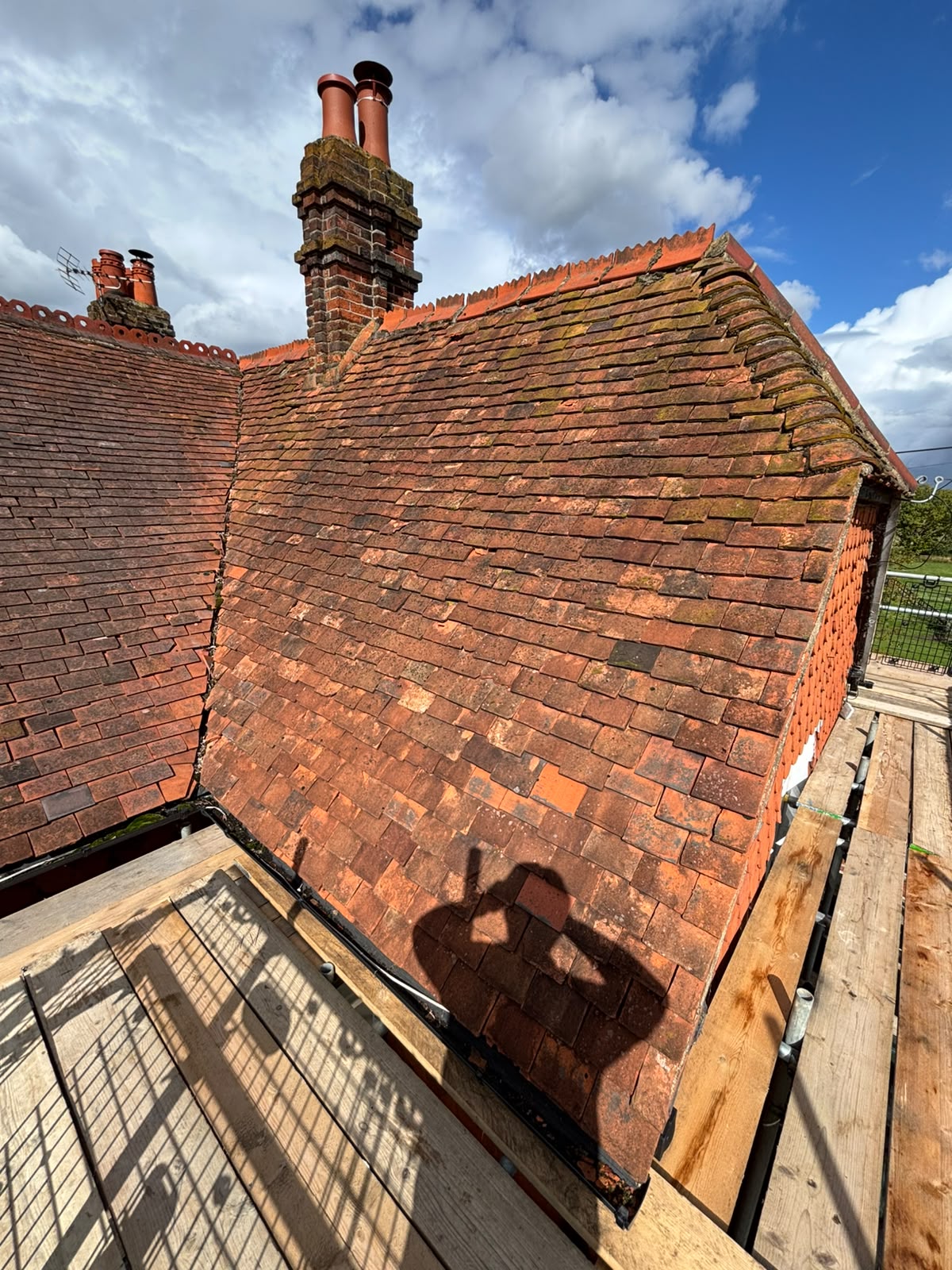
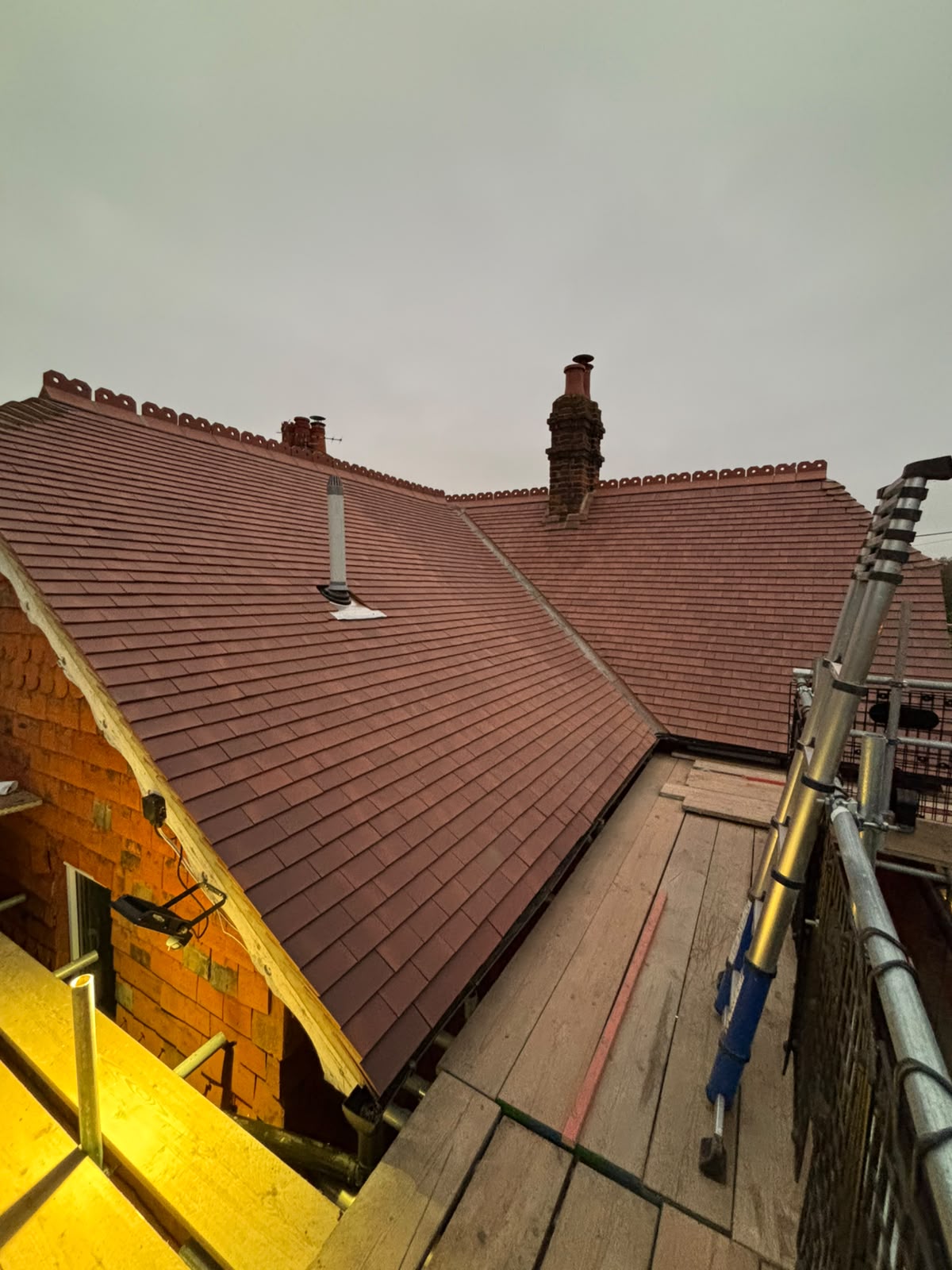
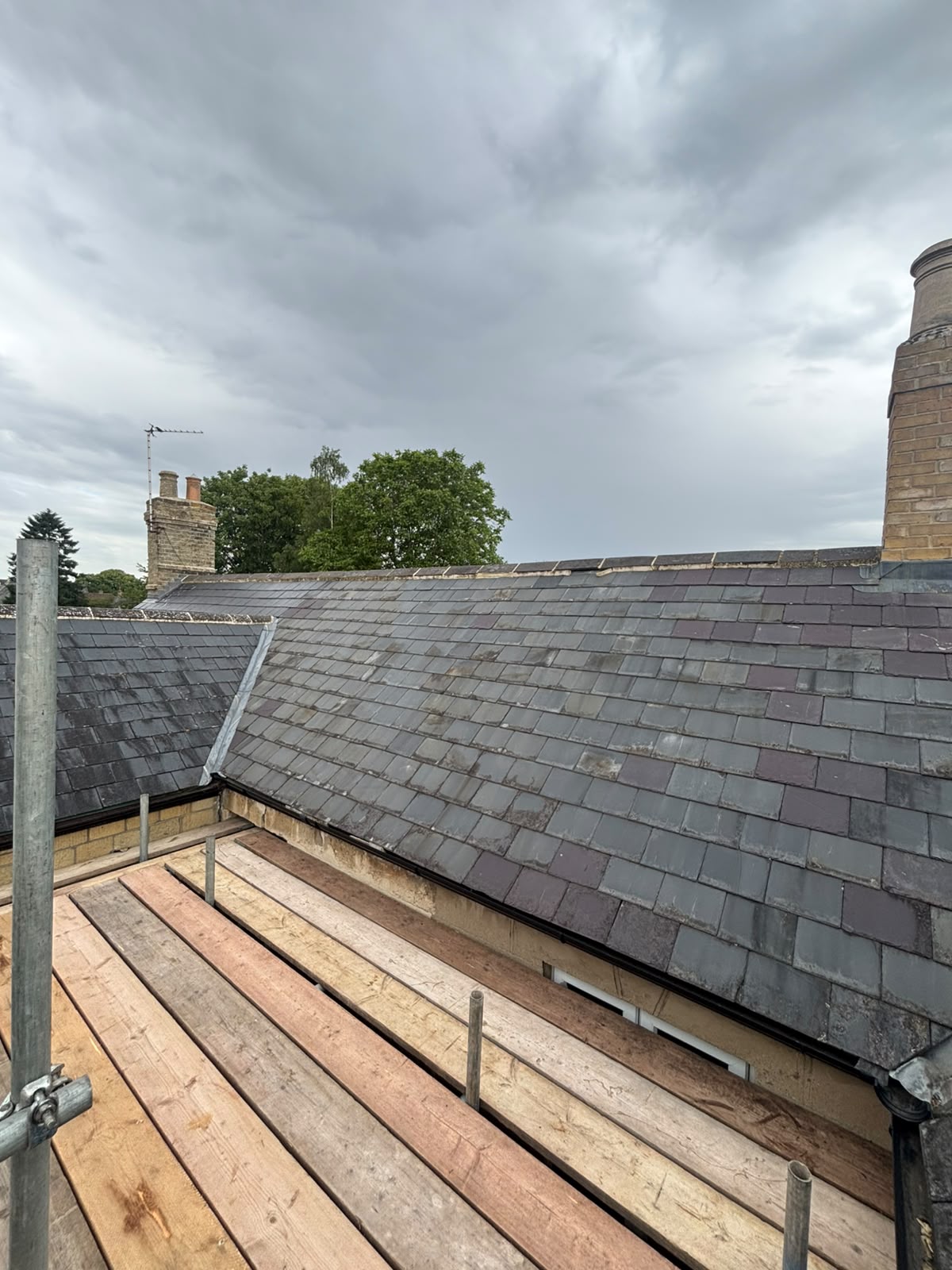
Recent cotswold stone roofing projects completed by White Horse Roofing Services across Oxfordshire, Berkshire and the Cotswolds.

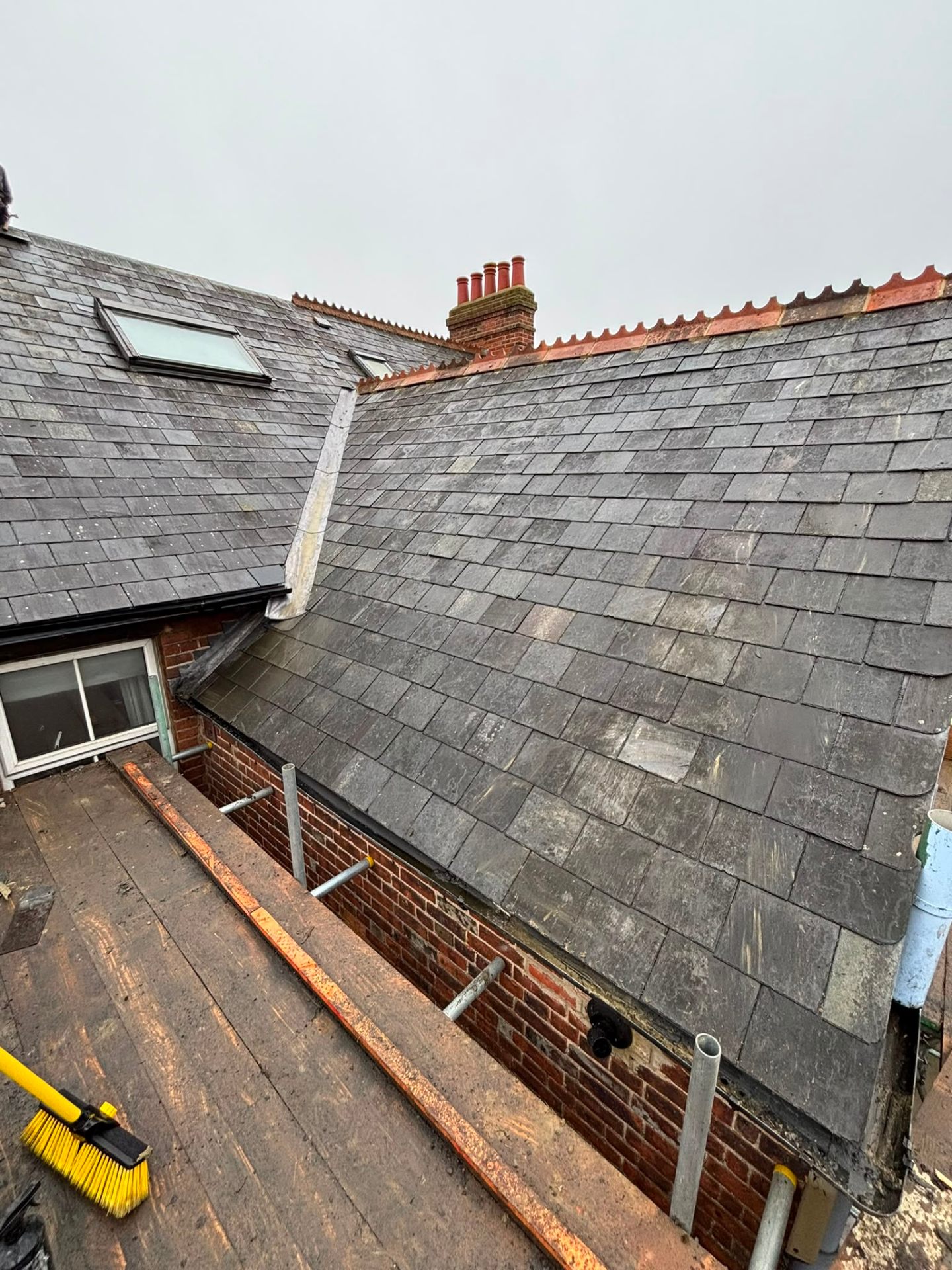
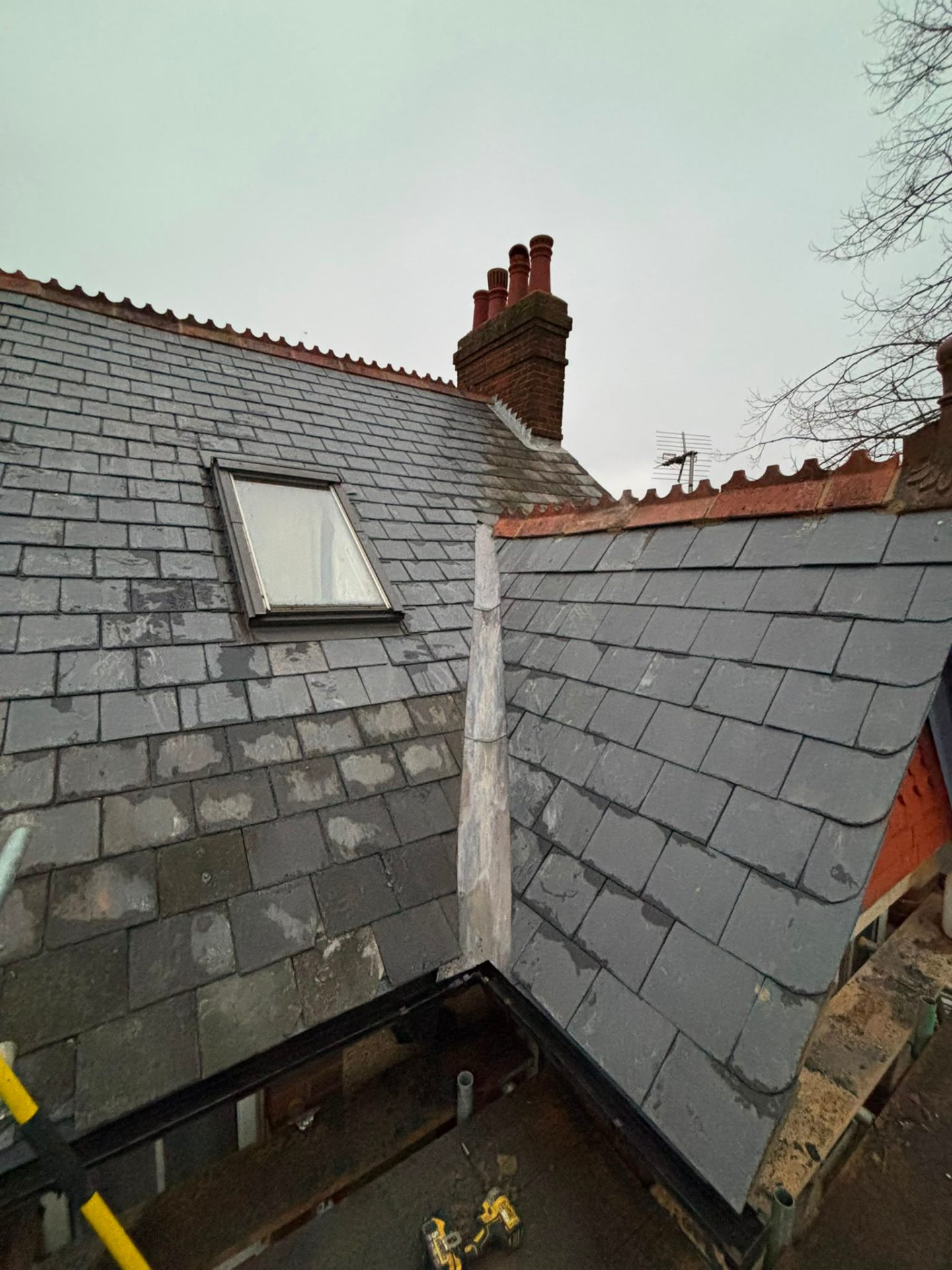
Pitched roof — after photo 1 by White Horse Roofing Services, OxfordshireBeforeAfter
Pitched roof replacement — drag to compare before & after.
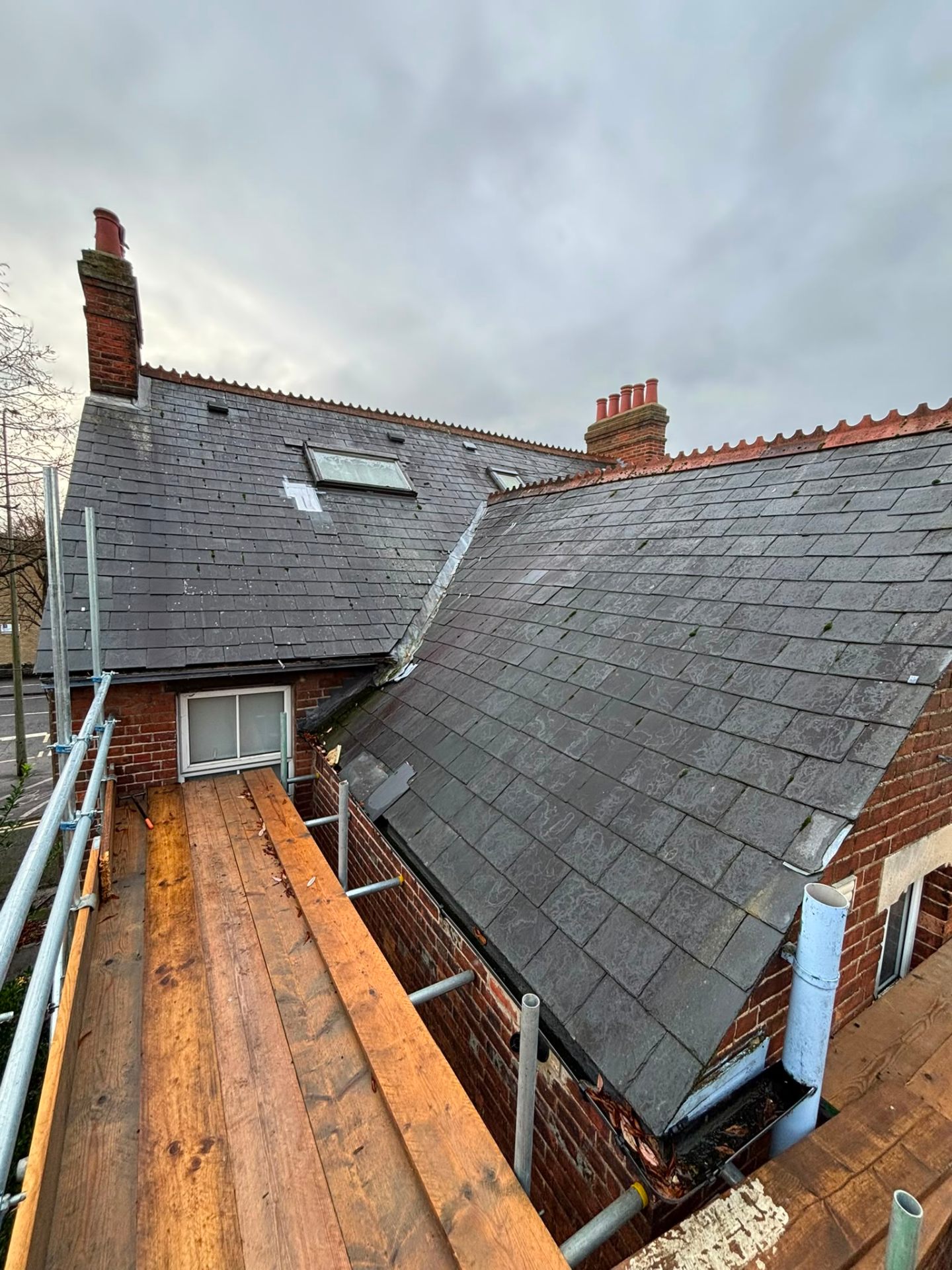
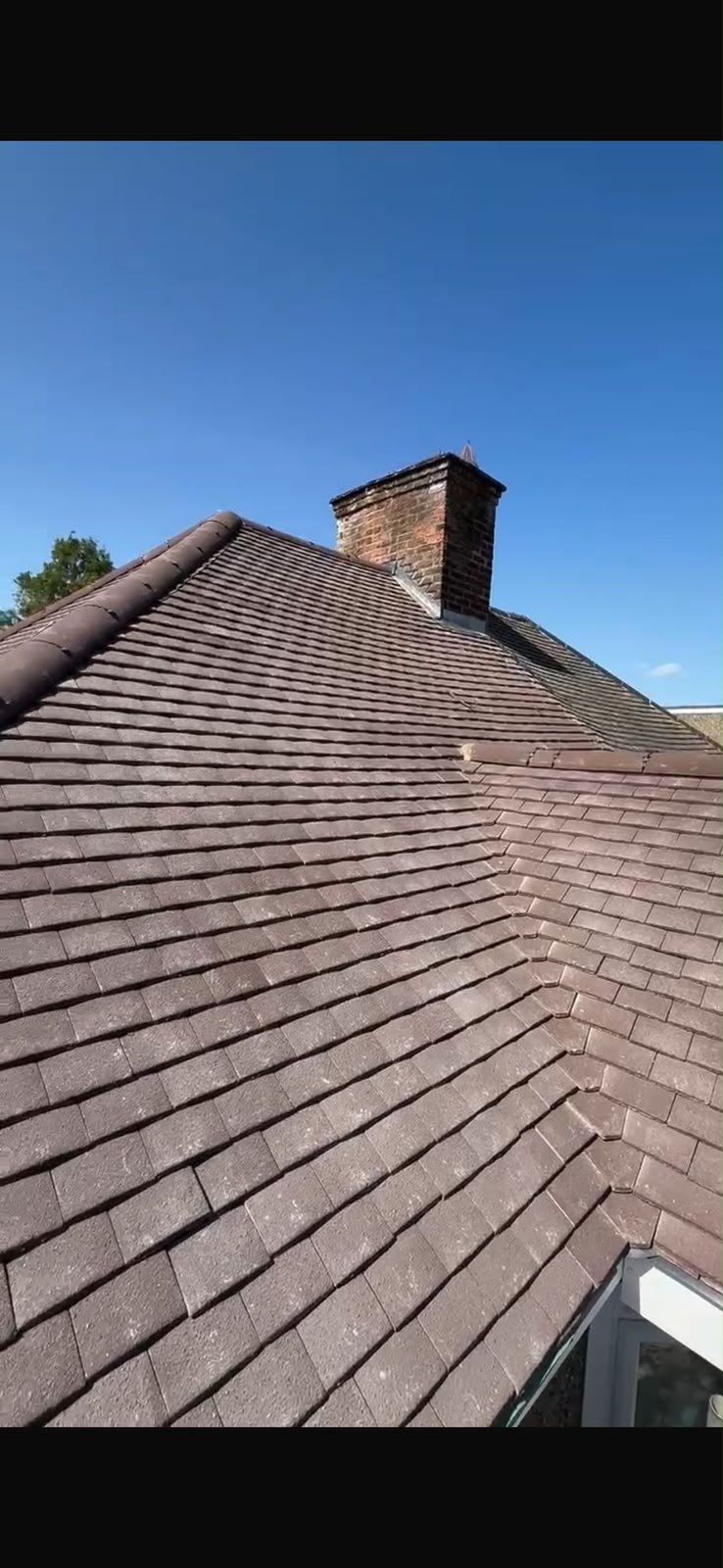
Pitched roof — after photo 2 by White Horse Roofing Services, OxfordshireBeforeAfter
Pitched roof replacement — drag to compare before & after.
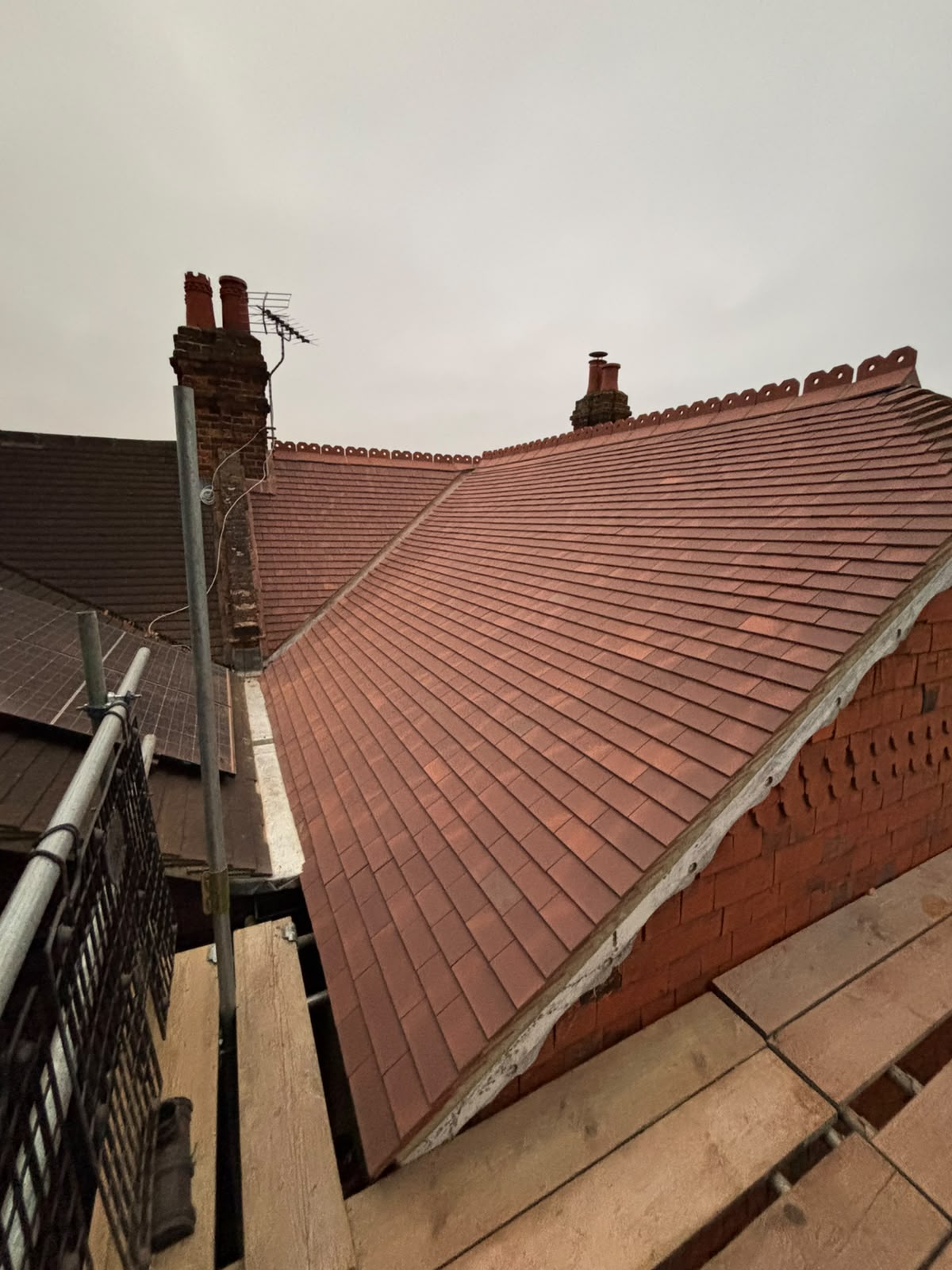
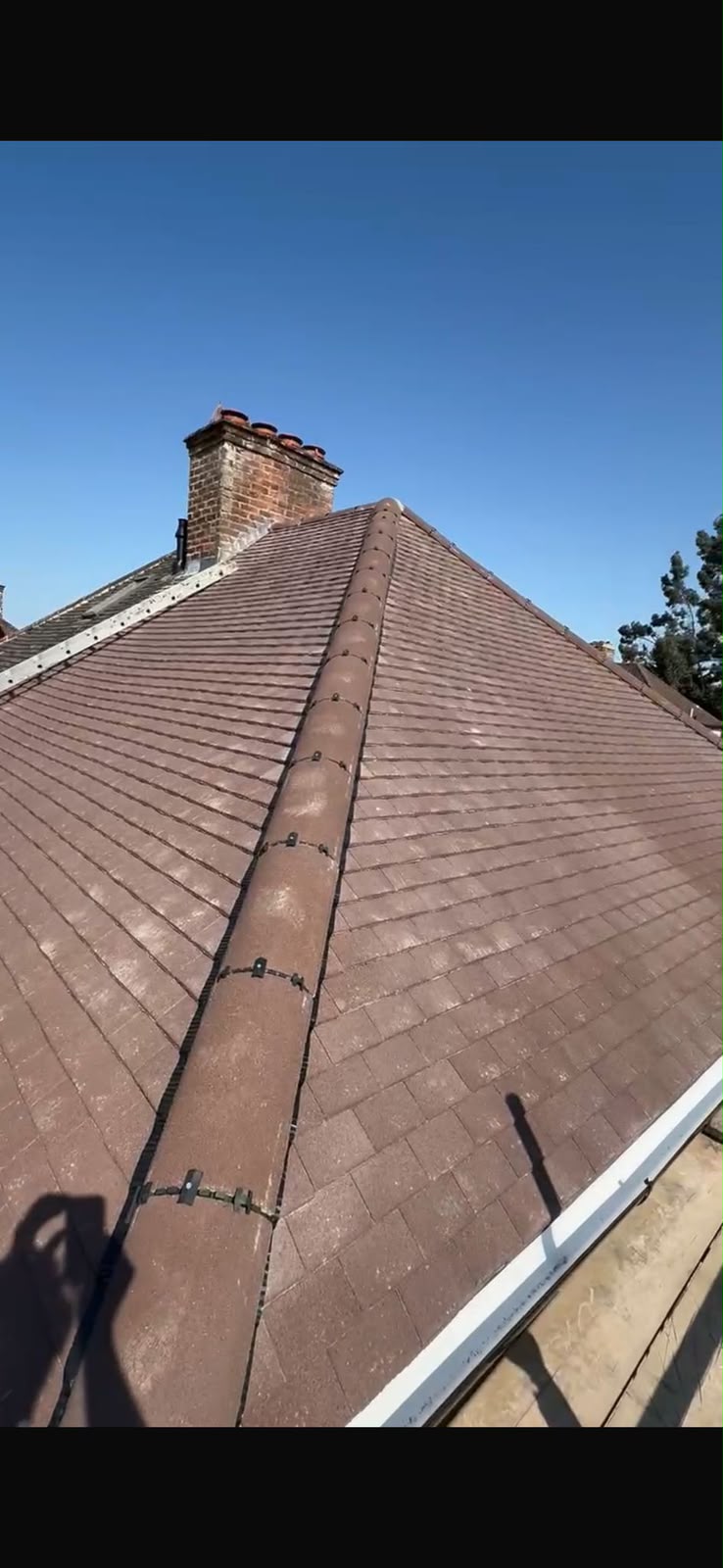
Pitched roof — after photo 3 by White Horse Roofing Services, OxfordshireBeforeAfter
Pitched roof replacement — drag to compare before & after.
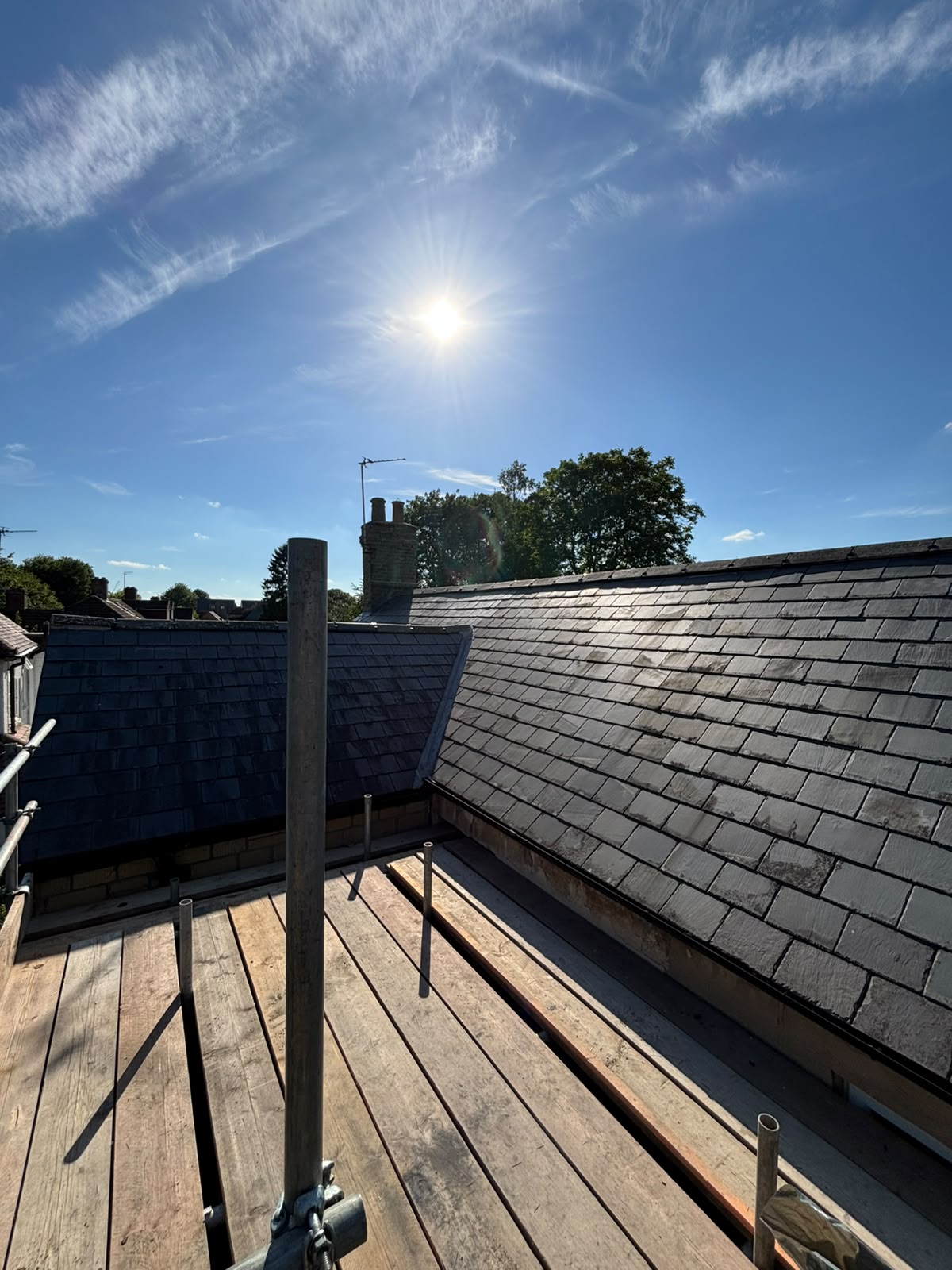
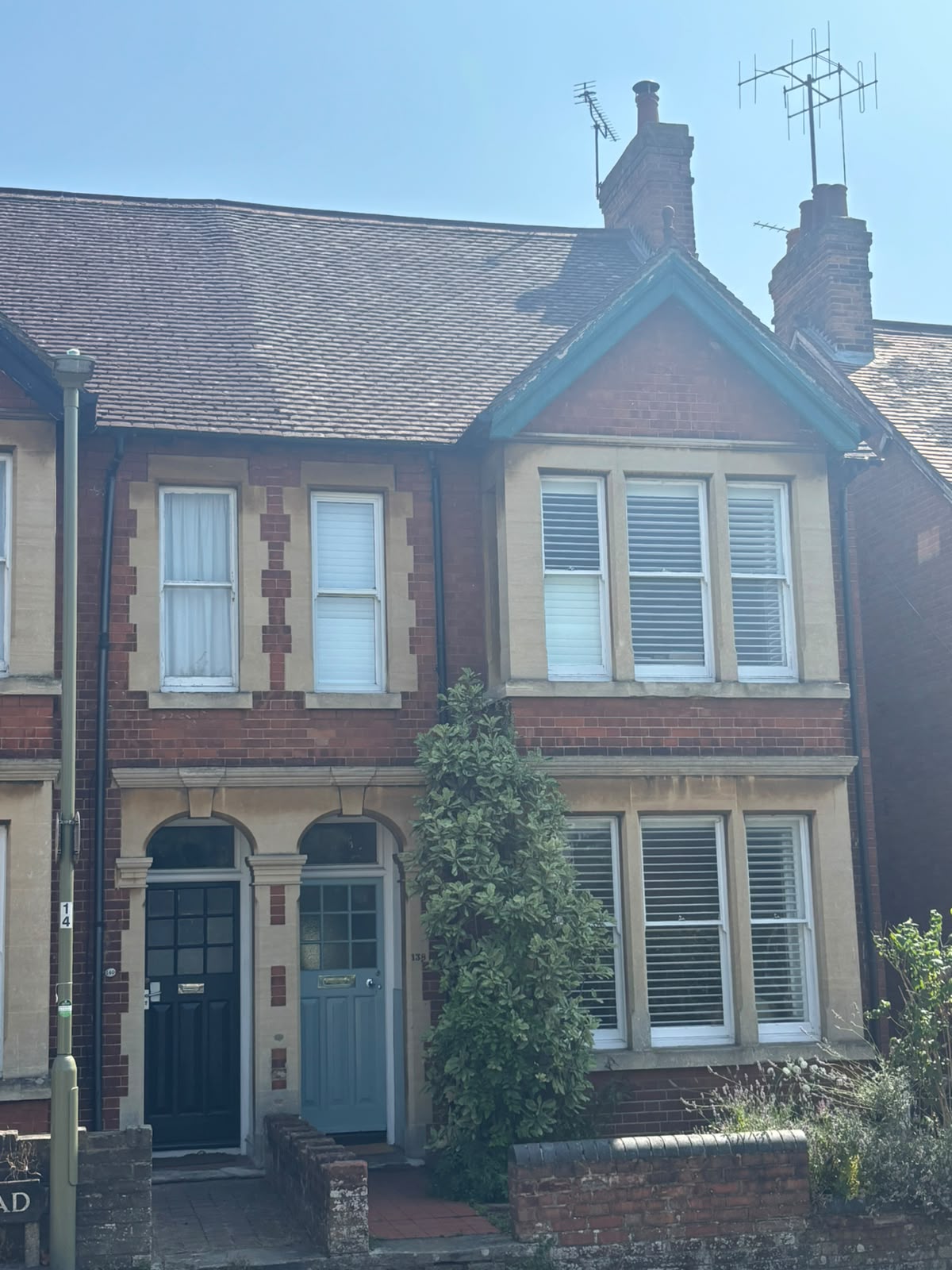
Pitched roof — after photo 4 by White Horse Roofing Services, OxfordshireBeforeAfter
Pitched roof replacement — drag to compare before & after.
Pitched roof — after photo 5 by White Horse Roofing Services, OxfordshireBeforeAfter
Pitched roof replacement — drag to compare before & after.
Pitched roof — after photo 6 by White Horse Roofing Services, OxfordshireBeforeAfter
Pitched roof replacement — drag to compare before & after.
Pitched roof — after photo 7 by White Horse Roofing Services, OxfordshireBeforeAfter
Pitched roof replacement — drag to compare before & after.
Pitched roof — after photo 8 by White Horse Roofing Services, OxfordshireBeforeAfter
Pitched roof replacement — drag to compare before & after.
Pitched roof — after photo 9 by White Horse Roofing Services, OxfordshireBeforeAfter
Pitched roof replacement — drag to compare before & after.
Pitched roof — after photo 10 by White Horse Roofing Services, OxfordshireBeforeAfter
Pitched roof replacement — drag to compare before & after.
Pitched roof — after photo 11 by White Horse Roofing Services, OxfordshireBeforeAfter
Pitched roof replacement — drag to compare before & after.
What You Get

Specific benefits.
No vague claims.

Every point below is something we do on every job — not a marketing line. Ask us at the survey and we'll show you exactly how.

Reclaimed Where Possible

We reuse every sound tile off your existing roof and source reclaimed stock for the shortfall — matched colour, matched weathering.

Lime Mortar as Standard

Bedding and pointing in traditional lime, not cement — the roof breathes, moves seasonally and does not crack the stone.

Diminishing Courses

Tiles graded by size on the ground and laid largest-at-eaves to smallest-at-ridge, the way a Cotswold roof is meant to look.

Heritage Detailing

Stone ridges, swept valleys, code-4 lead soakers and step-and-cover flashings — the details a general roofer misses.

Conservation-Ready

We work with conservation officers on listed and conservation-area properties and detail the roof to the standard they expect.

15-Year Workmanship Guarantee

Written 15-year guarantee on every full stone re-roof — the tiles themselves will out-live it many times over.

In Detail

The specifics —
materials, methods, situations.

Reclaimed vs new-cut Cotswold stone

Wherever the existing tiles are sound, they are re-used. A well-preserved Cotswold roof of 100+ years yields most of its stone back for a re-lay — the tiles are simply lifted, cleaned, sorted and graded before going back onto new felt and battens. This is both the right conservation answer and the right economic one, because reclaimed stone is scarce and priced accordingly.

Where reclaimed tiles are needed to make up the shortfall, we source them from Cotswold reclamation yards with a track record of properly weathered, correctly split stone. New-cut Cotswold limestone from active quarries is used where the specification calls for it, or where reclaimed supply cannot meet the volume — matched as closely as possible to the existing roof, and left to weather in over time.

Lime mortar, breathable membranes and correct battens

A Cotswold stone roof is a breathing structure. Bedding mortar on ridges, verges and abutments is traditional lime (typically NHL 3.5 or a hot-lime mix on very old properties), pigmented and matched to the existing pointing. Cement mortar is never used on the ridge or verge of a stone roof — its rigidity cracks the stone as the roof moves through seasonal temperature cycles.

Underlay is a modern breathable membrane, allowing water vapour from the house below to escape while keeping wind-driven rain out. Battens are treated softwood, graded and spaced to suit the gauge of the tiles being re-laid. Fixings are stainless steel or copper nails where the stone is drilled; oak pegs are used on very early properties where traditional peg-hung tiling is being restored.

Listed buildings and conservation areas

The Cotswolds AONB and the many conservation areas within Oxfordshire, Gloucestershire and Wiltshire mean that a re-roof on a period property is rarely just a technical job — it is a conservation one. Listed building consent is normally required for any change to the roof of a listed property, and planning approval may be needed within a conservation area even for like-for-like work.

We are used to working with local authority conservation officers, submitting specifications for approval, and adapting our detailing to satisfy consent conditions. We do not undertake thatch work, and we do not clad heritage stone in concrete or reconstituted-stone lookalikes. For everything else in Cotswold roofing — from a single slipped tile to a full listed-building re-roof — you are in the right place.

Related services

Cotswold Stone Roofing available in

Not sure if we cover your postcode? Ask us
FAQ

Everything homeowners
ask us about cotswold stone roofing.

Something not covered? Call 07522 468971 and we'll answer it directly.

How much does a Cotswold stone re-roof cost?+

Full stone re-roofs are quoted individually because so much depends on the salvage rate of the existing tiles, the pitch and complexity of the roof, and the volume of reclaimed stone required. As a broad guide, a typical stone cottage re-roof runs from £18,000 to £45,000+; large farmhouses and barns can be higher. Every quote is fixed price, in writing, and itemised — scaffold, strip-off, reclaimed and new stone, lime mortar, felt, battens, lead and disposal all listed separately.

How long does a Cotswold stone re-roof last?+

A properly installed Cotswold stone roof, laid on modern breathable felt with lime-mortar detailing, should comfortably run 80 to 100+ years before the next full intervention. The stone itself is effectively permanent; what wears out over time is the underlay, the battens and the lead flashings — all of which are refreshed at re-roof stage.

Can you reuse my existing stone tiles?+

In almost every case, yes. On a well-preserved roof we typically salvage 70 to 90% of the original stone for re-lay. Damaged, delaminated or previously mis-cut tiles are set aside, and the shortfall is made up with matched reclaimed stone or new-cut Cotswold limestone. We tell you the expected salvage rate at the survey stage.

Do I need listed-building consent or planning permission?+

Any change to the roof of a listed building normally requires listed-building consent. Like-for-like re-roofs within a conservation area may or may not need planning approval depending on the local authority and the specification. We advise on this at survey stage and can prepare specifications suitable for consent applications.

Do you use cement or lime mortar on Cotswold roofs?+

Lime mortar as standard — typically NHL 3.5, pigmented to match the existing pointing. Cement is never used on ridges, verges or abutments of a heritage stone roof; it is too rigid, cracks the stone as the roof moves seasonally, and is often refused on listed and conservation-area work.

Can you match the colour of my existing roof?+

Cotswold stone weathers to a distinctive honey-and-lichen patina over decades and no new tile will match a 200-year-old roof exactly on day one. By re-using your existing stone and topping up with weathered reclaimed tiles, we get as close as it is possible to get; any new-cut stone will weather in over the following years.

Do you work on stone barns and outbuildings?+

Yes — we re-roof and repair stone barns, cart sheds, stables and outbuildings alongside main-house work. Barn conversions with existing stone roofs are a regular part of what we do, including insulation upgrades between the rafters at re-roof stage.

Do you undertake stone-slate roofs outside the Cotswolds?+

Our patch is Oxfordshire, Berkshire and the Cotswolds. We work on Cotswold limestone, and on Stonesfield-style slates within that same geological run. For stone-slate roofs further afield (Yorkshire stone, Purbeck, Collyweston) we would refer you to a regional specialist.

Do you offer emergency cotswold stone roofing call-outs?+

Yes. For storm damage, active leaks and make-safes across Oxfordshire, Berkshire and the Cotswolds, call us and we will aim to get a surveyor to you the same day. Emergency temporary works can usually be carried out on the first visit so the property is watertight before a permanent repair is scheduled.

Is the quote free?+

Yes for owner-occupied properties. For homes you have not yet bought there is a £100 pre-purchase survey fee — fully deducted from the final quote if you go ahead. Every quote is fixed price, in writing, itemised and never a day rate.

What guarantee do you offer?+

Full re-roofs carry a 15-year workmanship guarantee. Flat roofs carry a 10-year workmanship guarantee. Repairs are covered by a written workmanship warranty appropriate to the scope. All work is backed by £1M public liability cover.

How do payments work?+

A deposit secures your slot in the diary. The balance is paid by bank transfer on completion. On larger projects we offer sensible stage payments so you are never paying ahead of the work delivered.

Which areas do you cover?+

Oxfordshire, Berkshire and the Cotswolds — including Oxford, Abingdon, Didcot, Wantage, Witney, Reading, Newbury, Cirencester and Faringdon. If you are close to the edge of that radius, call us — we can usually help.

Ready to sort it?

Book a same-day survey
and a fixed-price quote.

Family-run, fully insured, and backed in writing. Every quote is fixed price — no day rates, no drift. Call us or send a few details and we'll be in touch today.

Get Your Free Quote 07522 468971

15-year workmanship guarantee · Checkatrade 9.78/10 · Same-day surveys

Call Now Free Quote